55°30' / 27°05'
and Miedziuki
 |
 |
 |
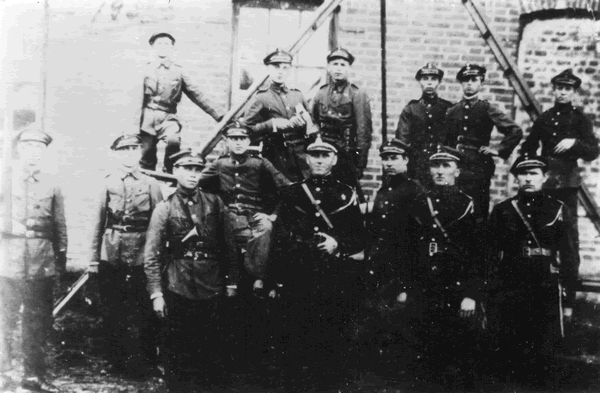
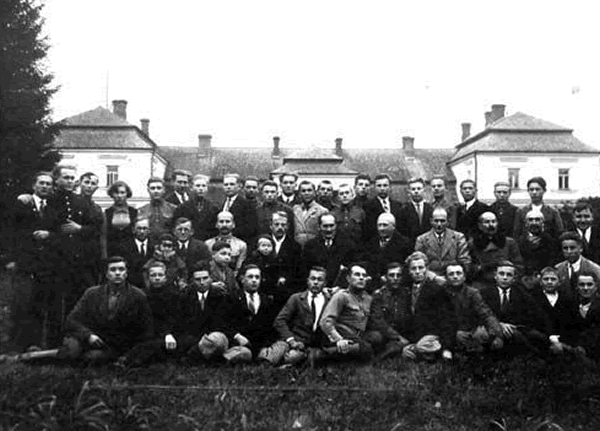
| #opsa-1: Picture of Opsa rail personnel: 1925. My grandfather Ludwik Umbras |
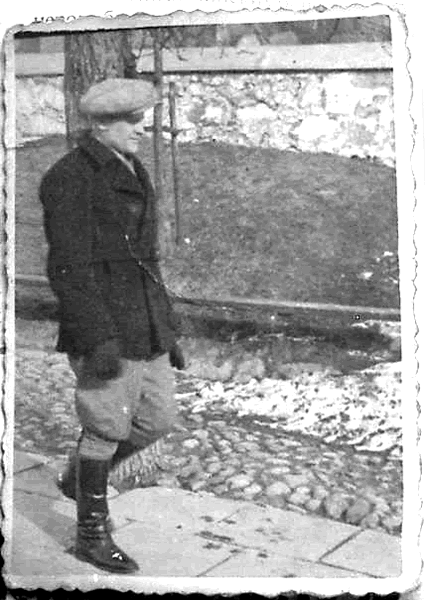
#opsa-2: Bronislaw Umbras in the grounds of St John the Baptist church, |
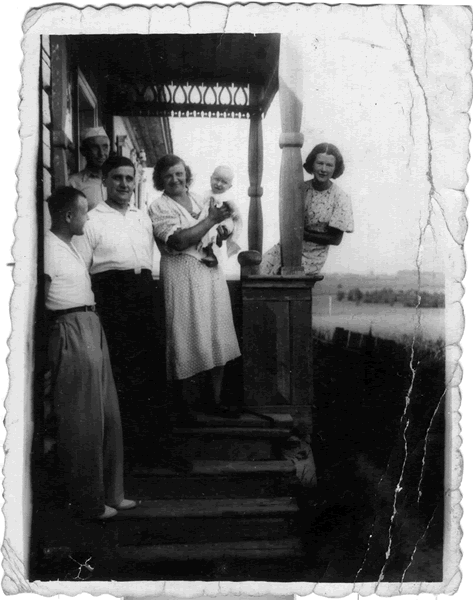
#opsa-3:: Picture donated by Vanda Pietkun (born Zloto near Braslaw, now |
 |
 |
 |
#opsa-4: |
#opsa-5: |
#opsa-6: |
 |
 |
 |
#opsa-7: |
#opsa-8: |
#opsa-9: |
 |
 |
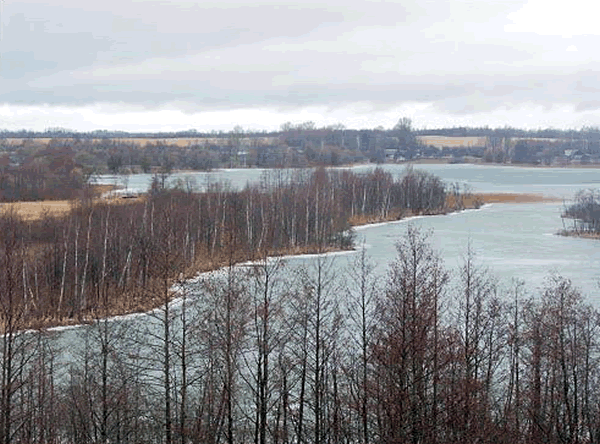 |
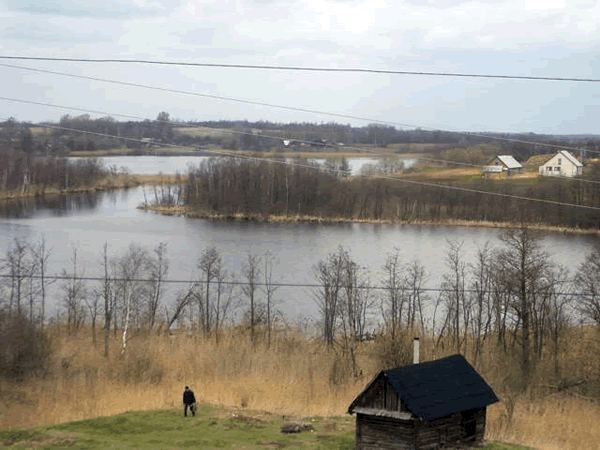
| #opsa-10: View of ozero Opsa
|
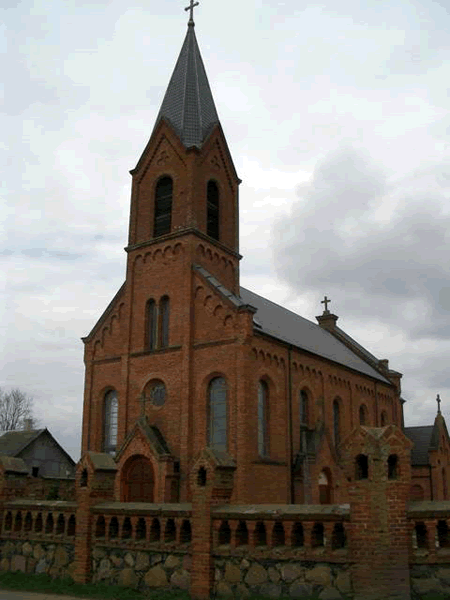
#opsa-11: St John the Baptist church Opsa, 2005 |
#opsa-12: |
 |
 |
 |
#opsa-13: |
#opsa-14: |
#opsa-15: |
 |
 |
 |
#opsa-16: |
#opsa-17: |
#opsa-18: |
 |
 |
 |
#opsa-19: |
#opsa-20: |
#opsa-21: |
 |
 |
 |
#opsa-22: |
#opsa-23: |
#opsa-24: Opsa c 1930 pub/pomnik.php?nazva_id=vibropsa04 |
 |
 |
|
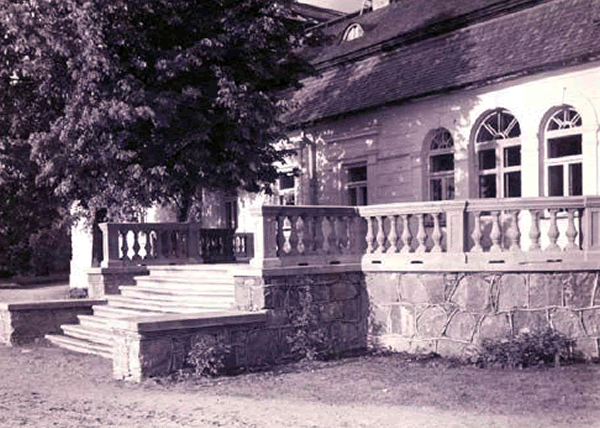
#opsa-25: Anna Ostrowska The school building from the 1930's |
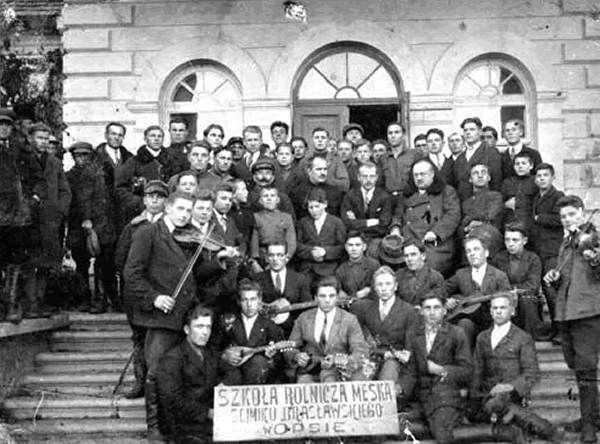
#opsa-26: The Polish school in Opsa 1931 |
#opsa-27: |
|
|
|
Created byTerese Fehlberg tuf@tpg.com.au and by Eilat Gordin Levitan
http://www.jewishgen.org/yizkor/Braslaw/bra481.html
Please share your comments or photos or links for posting on our Guestbook Page here: egl.comments@gmail.com
Opsa
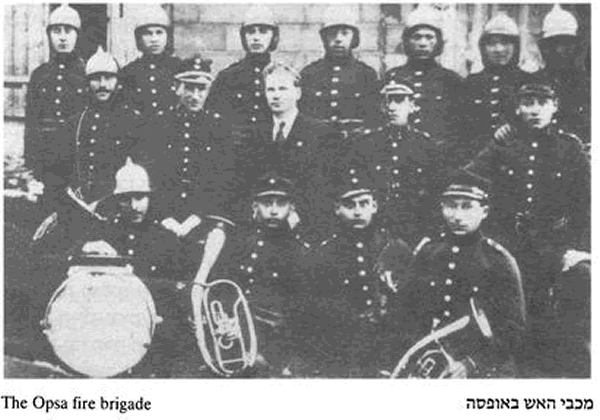
A shtetl, boasting approximately 300 Jews, who were linked with Braslaw by commercial and familial ties. Opsa is first mentioned in the fifteenth century in a royal decree of the Polish king Alexander in which he ordered a special tax imposed on its pasture lands and on fishing rights in its nearby lakes. In certain respects its history and development strongly parallel those of Braslaw and other vishuvim. It too kept changing hands as a result of the continual feuding of its rulers. Records show that in 1790 Opsa's population totaled 130 souls, made up of seventeen Christian and two Jewish families. The year 1794 is a red-letter date in the history of Opsa. It is the year of the famous Kosciuszko revolt against Czarist might when a great battle in which close to 40,000 Polish rebels took part, was fought on its outskirts. Another fateful date was April 28, 1928 that fine spring Sabbath morning when a fire broke out, almost razing the entire shtetl to the ground. Yaakov Aviel describes it as follows:
I remember it as if it were only yesterday. The fire started in Baruch-Itse's house. The tongues of flame fanned by the spring breeze spread like wildfire, enfolding roof after roof, house after house. The church bells pealed ominously, then suddenly fell silent as the fire began to engulf the sacred building and the burning crosses and massive bells came crashing to the ground.
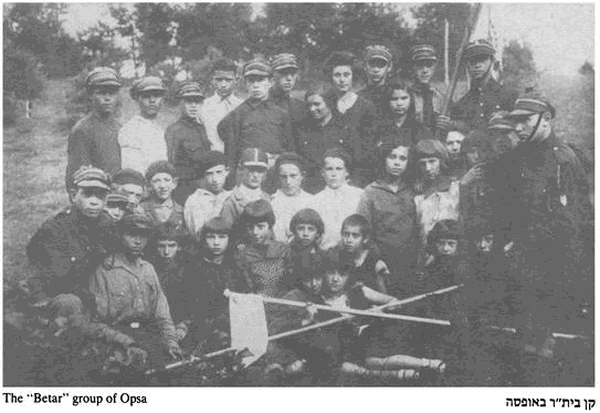
Opsa was again rebuilt but the fire was not forgotten. Interwoven into the fabric of the lives of its inhabitants it frequently served as a landmark. Thus they would say: "This still happened before the fire." Or "Do you remember the house before the fire?" Despite its small Jewish population of barely a few hundred souls, the communal and spiritual life of Opsa was multifaceted and replete with cultural activities, clubs, social circles, and political parties. It had two synagogues – a Chassidic and a Mitnaggid synagogue-cum house of study. The children attended "Cheder," a religious afternoon school, or studied in the Braslaw yeshiva (Torah academy)_ or in the Hebrew school Yavneh. The Betar was the predominant Zionist movement and attracted a large following among the youth. As in most Jewish shtetlach in the interwar period, the period engaged in business or plied trades. They were tailors, cobblers, tinkers, bankers, and so on. The Jews of Opsa, like those of Braslaw and environs, perished at the hands of the Nazis.
OPSA, the town and its Jews
Written by Arieh Munic
Son of Ester-Golda and Yisroel-Yizhak Munic
Translated to English by Joshua Leifer.
Submitted by Jacob Levkowicz, a relative of the author*
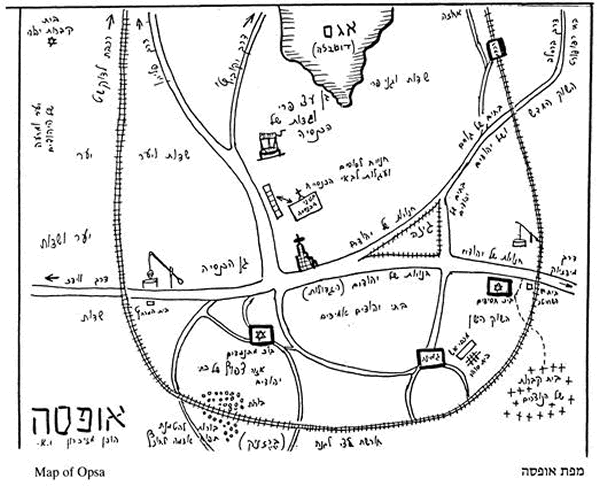
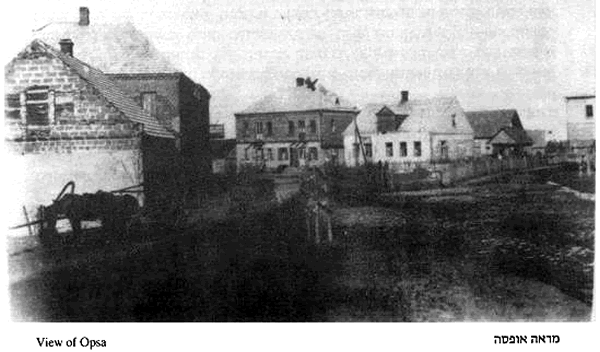
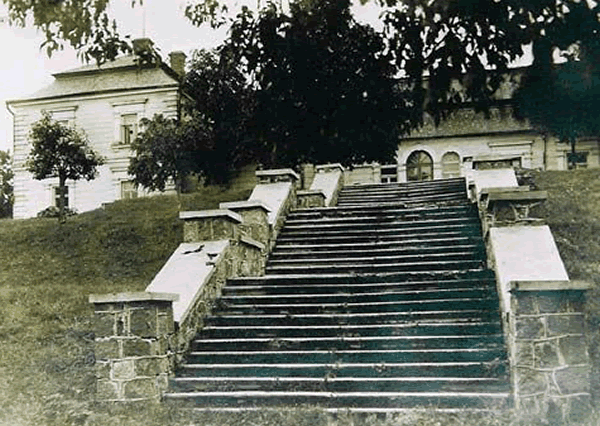
I have not found an explanation for the origin of the name Opsa. The buildings and yards of the town, those belonging to the Jews and those to the Christian peasants, are mixed together. A main street crosses the town, and at its center, the “Platz”—the market place; houses scattered on the hills, a calm lake with sweet waters, a Christian church on its fields and gardens, pine groves in several directions, then the forest that stretches into the distance, and beyond, the neighboring towns and peasant villages. On the northern side, the lake washes the steps of the entrance to the palace that belonged to Polish nobles of the Graf-Platter family. It is likely Opsa was an agglomeration of their serfs, including the Jewish residents.
On one of the sandy hills was the synagogue of the Mitnagdim, and around it, the homes of the middle class, who made their money on the weekly market day. There were tailors, cobblers, merchant-traders, carters, and among them those who walked great distances to the neighboring villages during the week and returned to welcome the Sabbath Queen at home.
On the eastern side, the street led to the synagogue of the Chasidim; they were the well-connected and the wealthy, among them the richest and most influential (“lordly”). There was also a cheder, where the learned Reb Yitzhak would teach Torah. A second cheder later opened, and the learned shochet Reb Mendel Liebersohn taught there. The barn in the shochet Reb Mendel’s yard was used as the slaughterhouse for small animals (“shechita kalah”). The slaughterhouse for larger animals (“shechita gasa”) was located east of the town.
The weekly market days provided many with their livelihoods. Government clerks and merchants from the big cities would come by train to the market, some from as far as Vilna. They would buy milk products, cheeses and butter, eggs and all kinds of agricultural products. On market days, the Jews would open stalls with all kinds of haberdashery, fabric, kerosene, salt, and more to sell to the peasants.
Life there was as it was in all the towns. Everyone knew what was going on with everyone else; a simcha in the town was a simcha for everyone. There were marriages between families, and clans formed; of course, each class within itself, without interfering [sic].
There were also humanistic goings-on. There was a small Yiddish library. There were attempts by youth groups to organize plays, mainly those by Goldfaden [a then-famous Yiddish playwright], and people would come to see “theater” performed in a storeroom of some kind or another. In later years there was a children’s library. And along with the reading began the organizing of chapters of Keren HaKayemet and Zionist organizations, like HeChalutz and Beitar. Beitar was the largest and most active of the organizations, and some of those who came out of Beitar reached Israel; they live here now, and may they live until 120.
There were also cultural activities and organized gatherings to prepare for Aliyah to Israel, and of course, ordinary, cheerful celebrations, too.
Melekhkeh Ha’Groi (Melekh the Brave)
Written by Arieh Munic and his sister Zehava Biloguski
Translated by Joshua Leifer.
Submitted by Jacob Levkowicz, a relative of the authors.
During the two actions and massacres, the first from the 3rd to the 5th of June 1942, the second in March 1943, there were numerous instances of bravery and sacrifice by individuals who were martyred. Those who survived brought with them these stories for the memory of future generations.
One of the chapters of the resistance and fighting, which is at the same time a revelation of Jewish heroism and dignity, is the story of Melekh Munic, or Melekhkeh Ha’Groi—Melekh the Brave.
Melekh was a young man from the family of Yisroel-Yitzhak and Ester-Golda Munic, preceded by his sister Zehava-Zalotka, who made Aliyah as a pioneer in 1935, and his brother, the oldest among them, Aryeh-Liebke, who made Aliyah to study at the Hebrew University in Jerusalem in 1936.
Melekh was a tailor by trade. When he was starting out, he apprenticed with a member of the Bikov family in Opsa, continued studying the trade and worked for a member of the Rappaport family from Opsa in Vilna, then later returned and continued to work for the Shiebel family in Vidzy, who were in-laws to his family. Although he had opportunities to come to Israel as part of the Second Aliyah, he did not want to abandon his mother after she had been widowed, following the death of her second husband Menachem-Mendel Liebersohn z’’l, the shochet and teacher in Opsa, or his younger step-siblings, three sisters and one brother.
Of the three hundred Jews who lived in Opsa when the Germans entered the town, only fifty or sixty remained after a short period of time. Most were expelled and transferred to the ghettos in Braslav, Vidzy, and other places. A few scattered to the surrounding forests. Of them, no survivors remain. Only a small number of Jews from Opsa fled during the Shoah to countries across the ocean, and a few survived as conscripts in the Red and Polish armies.
Those who remained in Opsa were mostly employed working and serving the local police and the Germans in the town as tailors and cobblers, chopping trees, and in cleaning services. A remnant of the Jews of Opsa remained there, whereas in the surrounding towns all the Jews were shot, or, with the Jews in the ghettos—such as Myory, Yud, Sharkovschina, Globokoye, Braslav, Druya, Drujsk, and others—transferred to the death camps. To the Jews in Opsa who remained joined, in secret, individual Jewish refugees from the surrounding towns, forests, and villages.
These Jews had stayed in Opsa after the liquidation of the Braslav ghetto in the first action and massacre (the 3rd to the 5th of June 1942). In the months of August-September 1942, the Germans transferred those who had remained to the Braslav ghetto. Only a few escaped and, after great hardship, reached the Kazyan Forest, somehow finding refuge with groups of partisans. The Jews who escaped the ghetto actions before the liquidations remained there, isolated, until they were liberated by the Russians.
Melekh remained in the Braslav ghetto with his fellow tailors who had been kept there by the Germans and the local police to work for them. In March 1943, it was felt that something was about to take place, something that was to reach the workshop. The tailors worked on the clothes of the Gestapo, and in the workshop, there was quicklime to disinfect the tailoring equipment. In the area, peasants could be seen gathering with carts in preparation for looting.
Melekh, who felt the siege was closing in and heard the rumors of an impending action and expulsion of the remaining Jews (most of them from Opsa), understood that there was no hope of survival. He ordered his friends to dress in the clothes of the Germans, and he would do the same. Next to the entrance, they prepared uncovered buckets of quicklime, and when the first German entered, they splashed the quicklime on his face, blinding him immediately. Melekh removed his pistol and shot him on the spot and three other Germans. The Jews barricaded themselves in the house and began to shoot at the Germans and police who surrounded them. Melekh exploited the confusion and the fact that he was dressed in German uniform and continued to shoot at Germans, who thought he was shooting at Jews, all while ordering his friends to escape.
The Jews continued to return fire with weapons they had in hiding. Melekh—dressed as a Gestapo officer, tall, blond, handsome, and Aryan-looking—moved unseen between the streets of the Braslav ghetto, shooting at the Germans and police. Only on the edge of the town did the local non-Jews recognize him and then alert the Germans, who found him and murdered him on the spot.
The small group of Jews who remained surrounded in the house continued to shoot and kill the Germans and police who approached. The Germans retreated. Once they [the Jews] ran out of ammunition and stopped shooting, the Germans approached, throwing grenades at the house. That was the end of the self-defense of Melekh and his comrades, killed with weapons in hand, who died as martyrs and for the sake of Jewish dignity.
__
* Jacob Levkowicz wrote;
My grandmother, Chaia Levkowicz, nee Meszengiser, was born in Opsa to Pesia Meszengiser nee Munic and Sholem Meszengiser. Pesia's uncle, Israel Munic, had three children - Zehava (Golda), Arieh, and Melekh Munic. Zehava Biloguski and Arieh Munic moved to Palestine in 1935 and 1936, and from the translation, you'll see that Melekh stayed behind to care for their mother. So that makes Zehava and Arieh my grandmother's first cousins, once removed.